Material Ordering and Supplier Coordination
Learn how upholstery shops order fabric, foam, batting, trim, and supplies only after scope, yardage, stock, dye lot, receiving checks, and schedule risk are controlled.
Learning Objectives
- Explain why material ordering should follow approved scope, yardage assumptions, and supplier availability checks.
- Identify ordering variables that can change cost, schedule, matching, and finished quality.
- Inspect received materials before cutting or installing them.
- Document supplier, dye lot, replacement, backorder, and customer-approval risks in the job file.
Metro Vancouver upholstery project?
If the furniture is in Metro Vancouver, send project photos for a local reupholstery quote. For general upholstery research, keep using the handbook.
Material ordering starts before the supplier invoice is written. The shop should already know what the customer approved, what yardage the cutting plan requires, what labour assumptions depend on the material, and what would change the schedule. If those pieces are not settled, ordering can turn a clear job into a dispute: the fabric arrives short, a dye lot cannot be matched, the foam is unavailable, or the customer changes direction after non-returnable material has been purchased.
In upholstery, material coordination is more than buying fabric. It includes face fabric, welt or contrast goods, deck cloth, lining, dust cover, foam, batting, thread, zipper, buttons, nailheads, adhesive, webbing, spring parts, and anything else the job needs to move without interruption. The right ordering process protects the cutting table, the schedule, and the customer's expectations.
Ordering is also where the estimate becomes real. Until the material is approved, available, received, and inspected, the job still contains assumptions. The shop should treat those assumptions as live risks rather than background details.

ordering setup
Confirm the job before the order
The safest material order is tied to a written scope. Before placing it, the shop should be able to answer these questions from the job file.
| Ordering question | Why it matters | What to record |
|---|---|---|
| Has the customer approved the fabric and any contrast materials? | A colour, pattern, or texture change can alter yardage, labour, and schedule. | Fabric name or sample reference, selected face direction, and any approved substitutes. |
| Is the yardage based on the final cutting assumptions? | Repeat, nap, railroad direction, welt, skirts, and defects can change the required amount. | Yardage, width, repeat, matching priority, and contingency. |
| Are hidden-condition assumptions still open? | Support, cushion, or frame findings can change foam, webbing, batting, or hardware needs. | What is included now and what waits for teardown approval. |
| Is the supplier stock real and current? | A quote can be correct and still fail if fabric is discontinued, short-stocked, or backordered. | Stock check date, quantity available, expected ship time, and return limits. |
| Are dye lot or batch issues relevant? | Later add-on orders may not match the original material. | Lot/batch information where provided and whether extra material is ordered for future service. |
| Are receiving checks planned? | Material can arrive damaged, short, wrong, or unsuitable before anyone cuts it. | Inspection responsibility, defect policy, and what happens before production starts. |
Supplier Control Path
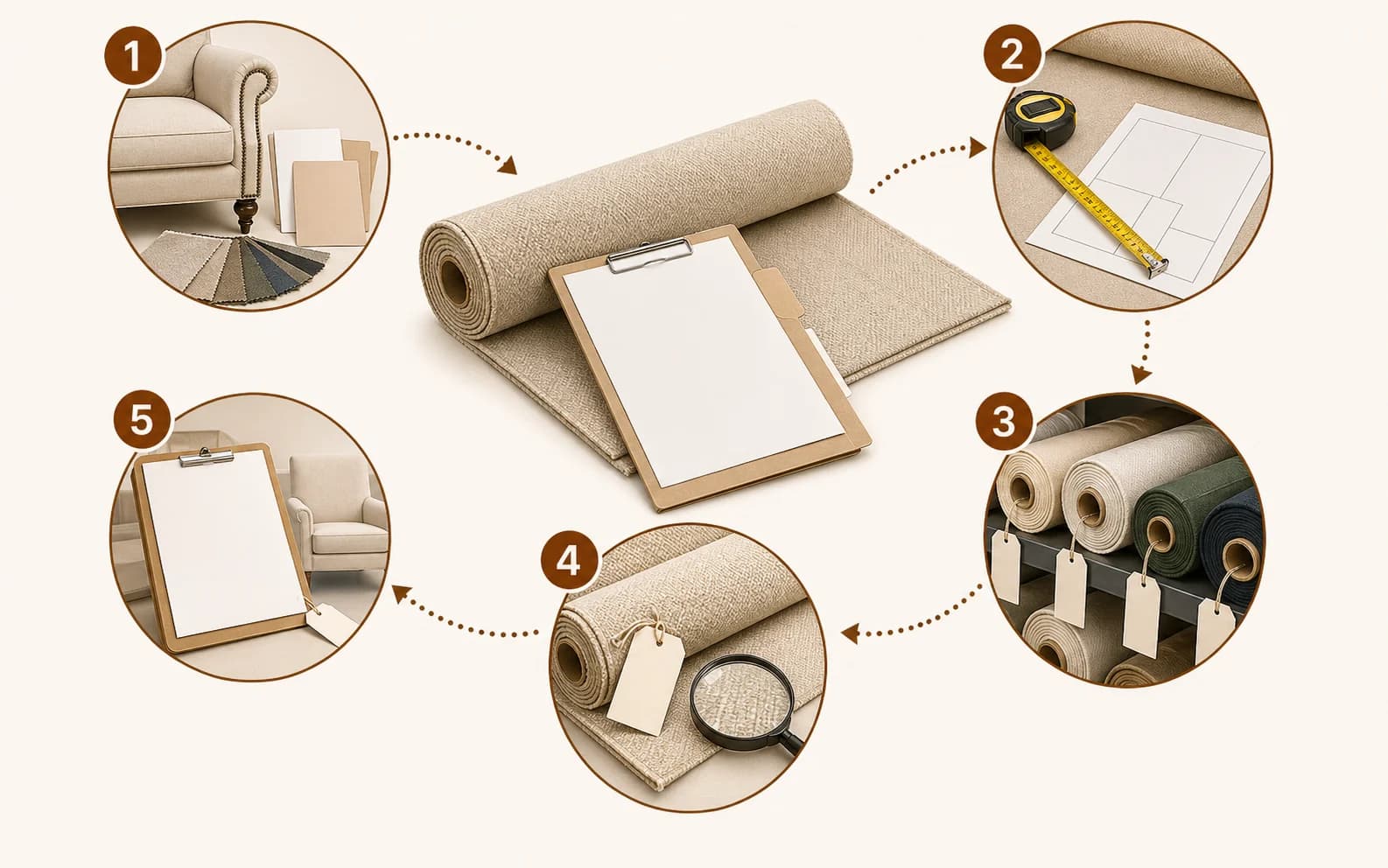
- 1Approved scopeOrder only after the customer has approved the fabric, finish choices, substitutions, and non-returnable material risk.
- 2Yardage assumptionsConfirm width, repeat, nap, railroad direction, matching priority, welt, skirts, and contingency before purchasing.
- 3Supplier stockCheck current stock, lead time, dye lot or batch risk, return limits, and whether the required quantity is continuous.
- 4Receiving inspectionInspect quantity, colour, face direction, flaws, odour, width, repeat, and material behavior before cutting.
- 5Job file handoffKeep order details, supplier records, receiving photos, schedule notes, and approvals with the production file.
Ordering is part of the estimate, not an errand after it
The order should confirm the quote, not rewrite it. Fabric width, repeat, nap, railroad direction, dye lot, foam specification, zipper choice, trim, and supplier limits can all change labour or schedule. If the quote assumed a plain fabric and the customer later chooses a large repeat, the material order should send the job back to yardage and labour review before money is spent.
This is why ordering belongs in the estimating workflow. It is the bridge between customer approval and production.
Supplier reality changes the plan
Customer approval does not guarantee supplier availability. A professional shop treats supplier information as a live part of the estimate. Stock can disappear between quote and deposit. Lead times can change. A fabric may be available in one colour but not another, or the required quantity may exceed what the supplier can ship from one lot.
That is why the job file should distinguish estimate assumptions from confirmed order facts. "Assumes selected 54-inch fabric is available in one continuous piece" is different from "Supplier confirmed 14 yards in stock on April 24." The first protects the quote while the customer is deciding. The second supports the purchase decision.
For materials that affect performance, the shop also needs the right evidence. Foam density and firmness, outdoor fabric limitations, cleaning codes, backing, leather hide quality, vinyl stretch, and commercial specifications should not be guessed from appearance. If the customer is paying for a performance claim, the job file should keep the supplier information that supports it.
Receiving inspection happens before cutting
Ordering is not finished when the package arrives. The shop should inspect material before it is cut, sewn, glued, or installed. Once the work begins, supplier defects become harder to prove and more expensive to correct.
Check the roll or shipment against the order: quantity, colour, face, width, repeat, direction, damage, odour, creases, stains, flaws, and whether the material behaves as expected. For foam and filling, check thickness, firmness, recovery, and whether it matches the approved comfort plan. For trim and hardware, check quantity, finish, size, and whether the colour or shape matches the visible standard.
If something is wrong, stop before cutting. Photograph the issue, keep packaging where useful, contact the supplier, and explain any schedule impact before production depends on the flawed material.

receiving inspection
Material categories to coordinate
The face fabric is only the most visible order. A job can still stall if smaller materials are missing or mismatched.
| Material category | Coordination risk |
|---|---|
| Face fabric | Width, repeat, direction, dye lot, flaws, cleaning code, stock, and return limits. |
| Contrast or welt fabric | Yardage, colour agreement, thickness, seam bulk, and whether it arrives with the main fabric. |
| Foam and cushion fills | Density, firmness, thickness, availability, wrap allowance, and customer comfort expectations. |
| Deck, lining, and dust cover | Colour, weight, breathability, abrasion, and whether hidden materials match the job standard. |
| Thread, zipper, and notions | Colour, size, slider access, strength, seam bulk, and serviceability. |
| Hardware and trim | Nailheads, buttons, glides, clips, springs, webbing, and replacement parts that may need lead time. |
| Adhesives and cleaners | Compatibility, safety data, ventilation needs, odour, and finish/fabric sensitivity. |
The shop should not assume these items can be solved at the last minute. Small missing materials can stop a large job.
Worked case: the backordered fabric
A customer approves a fabric after the yardage estimate is complete. The supplier lists it online, but when the shop checks stock, only part of the required quantity is available. More may arrive in six weeks, but the supplier cannot promise the same dye lot.
The rushed answer is to order what is available and hope the rest matches later. The professional answer is to slow the order down. The shop can ask whether the customer wants to wait, choose a substitute, reduce matching expectations, or order enough extra from a confirmed lot if the supplier can locate it. The estimate should not silently absorb the risk of mismatched fabric or delayed completion.
A clear customer explanation is: "The fabric choice works for the chair, but the supplier does not currently have enough confirmed material from one lot. Before we order, we should decide whether to wait, choose an alternate fabric, or adjust the schedule. We do not want to start cutting a job that may not have matching material available."
Keep ordering connected to scheduling
Material timing should control shop scheduling. A job is not ready for production just because it has a deposit if the fabric, foam, trim, or hardware has not been received and inspected. Cutting labour should not be scheduled tightly around an unconfirmed shipment unless the customer understands the risk.
For multi-piece or commercial jobs, coordination matters even more. A missing roll, delayed foam shipment, or unapproved substitution can stop multiple pieces at once. The job file should show what was ordered, when it was expected, when it arrived, who inspected it, and what decision was made if the supplier changed the plan.
Substitution rules belong in the approval record
Substitution decisions should be settled before the shop is under pressure. A substitute is not just "something close." It can change colour, hand, thickness, stretch, seam bulk, abrasion performance, cleaning limits, and how the finished piece sits. Even a small change in fabric body can affect welt, boxing, cushion crown, skirt hang, and the way corners close.
The job file should say who can approve a substitute and what kind of substitute is acceptable. A designer may approve within a colour family. A homeowner may want to see every alternate sample. A commercial client may require performance documents, flame or abrasion data, or a purchase-order revision before the shop can proceed.
Useful substitution language is specific: "If the selected fabric is unavailable in the required quantity, production pauses until the customer approves an alternate fabric, revised yardage, and revised schedule." That is clearer than "supplier changes may occur." It tells everyone that the material decision belongs to the customer before cutting begins.
Schedule from received material, not promised material
Supplier estimates are planning information, not production proof. A promised ship date can move. A carrier can delay a roll. A fabric can arrive with flaws. A foam order can arrive in the wrong firmness. A trim colour can look correct online and wrong beside the fabric.
For that reason, the safest production schedule starts after receiving inspection. The shop can still plan tentatively, but bench time should not depend on a material that has not passed inspection unless the customer accepts the risk. This is especially important when pickup, teardown, and delivery are coordinated around one narrow window.
The schedule record should show three different dates: the supplier's expected date, the actual arrival date, and the date the shop cleared the material for production. Those dates help explain delays without blame. They also help the shop see whether a supplier is reliable enough for future deadline-sensitive work.
Commercial and multi-piece ordering risks
Commercial and multi-piece jobs magnify small ordering mistakes. One chair with a fabric flaw is a problem. Twenty matching chairs with a short roll, mixed lots, or missing trim can become a production failure. The shop should order with the full set in mind, not one unit at a time.
For repeat work, confirm whether every piece must match exactly or whether some variation is acceptable. Waiting-room chairs, restaurant banquettes, and strata common-area furniture often need consistent colour and performance across a set. If one roll cannot cover the full job, the customer should know whether lot variation is possible before the first piece is cut.
Staged work also needs material control. If the shop completes half the pieces now and half later, future matching depends on retained fabric, lot availability, and supplier continuity. The estimate should say whether extra material is being ordered for future repairs or later phases. If the customer declines that allowance, the remaining risk should be written down.
Customer explanation
A plain explanation helps prevent supplier problems from sounding like shop disorganization:
"We place the order after the fabric, yardage, and scope are approved. When the material arrives, we inspect it before cutting. If the supplier is short, the dye lot is uncertain, or the fabric arrives flawed, we pause before production so you can approve the next step."
That tells the customer why ordering and scheduling are linked. It also explains why a job may not move to the bench the same day a deposit is paid.
Final ordering check before cutting
Before the first panel is cut, the shop should be able to pass a final ordering check:
- The approved scope and material selection match the current quote.
- Yardage was recalculated after any fabric, repeat, welt, skirt, cushion, or trim change.
- Supplier stock, lead time, return limits, and dye lot or batch notes are recorded.
- Face fabric, contrast goods, foam, batting, zipper, thread, trim, support parts, and dust cover are either in hand or intentionally excluded from the current stage.
- The received material was inspected for quantity, colour, width, face, direction, flaws, odour, and suitability.
- Any substitution, delay, shortage, or visible compromise has customer approval before production begins.
This check is simple, but it prevents the most expensive ordering mistake: discovering after cutting that the job file, customer approval, supplier shipment, and bench work no longer describe the same job.
What to document
- Approved fabric, colour, width, repeat, direction, and substitution rules.
- Yardage calculation assumptions, including welt, skirts, pattern matching, and contingency.
- Supplier stock check date, quantity, lead time, backorder status, return limits, and dye lot or batch details.
- Foam, batting, thread, zipper, trim, hardware, and support materials tied to the job.
- Receiving inspection photos and notes before cutting.
- Customer approval for supplier substitutions, delays, short stock, or visible compromises.
Common mistakes
- Ordering fabric before the customer has approved the final scope, fabric, yardage assumption, and non-returnable material risk.
- Treating supplier website stock as confirmed availability.
- Forgetting dye lot, repeat, nap, railroad direction, welt, skirts, and future service allowance when ordering yardage.
- Cutting material before checking quantity, colour, flaws, direction, and suitability.
- Assuming foam, batting, trim, hardware, thread, and dust cover can always be sourced later without affecting schedule.
- Failing to tell the customer when a supplier delay, substitution, or stock shortage changes the job.
Material ordering is the point where the estimate becomes real inventory. A good order proves that the customer approved the material, the yardage logic still holds, the supplier can provide what the job requires, and the received goods match the work about to begin. When that chain is documented, the shop can cut confidently instead of discovering the problem after the first panel is already on the table.
Knowledge Check
Pass this check to complete the lesson.
Answered 0/4.
Question 1
A customer approves a patterned fabric, but the supplier can confirm only part of the required yardage in one dye lot. What should the shop do before ordering?
Question 2
Why should received fabric be inspected before it is cut?
Question 3
A job has approved fabric but teardown may reveal spring or cushion repair. Which ordering plan is strongest?
Question 4
What is the main risk of treating supplier website stock as confirmed availability?
Have a local piece ready for reupholstery?
For Metro Vancouver sofas, chairs, cushions, or commercial seating, mention "Material Ordering and Supplier Coordination" with your photos so we can price the actual work accurately.