Fabric Fading, Crocking, and Dye Transfer
Learn how to separate upholstery fabric fading, crocking, dye transfer, soil, abrasion, and cleaning risk before promising a repair.
Learning Objectives
- Separate fading, crocking, dye transfer, body-oil soil, abrasion, and pile distortion during inspection.
- Use protected-area comparison and white-cloth testing before recommending cleaning or replacement.
- Explain why missing colour cannot be cleaned back into fabric.
- Document colour-stability risk before treating or quoting upholstery work.
Metro Vancouver upholstery project?
If the furniture is in Metro Vancouver, send project photos for a local reupholstery quote. For general upholstery research, keep using the handbook.
Colour problems are not all stains
A pale sofa arm is not always dirty. A blue mark on a cream cushion is not always the fabric's own dye failing. A dark headrest may be body oil, worn pile, cleaning damage, or several of those conditions at once.
The first duty is to decide whether colour is missing, moving, or sitting on the surface. That distinction controls what can be cleaned, what must be replaced, and what should be explained before the customer approves work.
Separate the evidence
Use protected areas as your control sample. Lift a cushion, open a seam allowance if it is accessible, look under a skirt, compare the inside face of a loose cover, and check the back side of a swatch. The question is not only "what colour is visible?" but "what colour should this fabric be if light, use, and cleaning had not changed it?"
| Condition | What it looks like | What it usually means | First inspection move |
|---|---|---|---|
| Fading or colour loss | Exposed areas are paler than protected folds, seams, cushion undersides, or the back of the fabric. | Colour has been changed by light, oxidation, cleaning chemistry, or age. Cleaning cannot put missing dye back. | Compare exposed and protected areas before treating the surface. |
| Crocking | A white cloth picks up colour when rubbed on the upholstery itself, dry or damp. | The upholstery dye or finish may not be stable enough for aggressive cleaning, friction, or heavy use. | Test with clean white cloths in a hidden area and document dry versus damp results. |
| Dye transfer | A foreign colour sits on the fabric, often from denim, blankets, cushions, rugs, or packaging. | Outside dye migrated onto the upholstery and may spread or set if treated incorrectly. | Identify the likely donor material and test removal in the least visible place first. |
| Body-oil soil | Arms, headrests, and front edges darken where skin and hair contact the fabric. | Soil may be partly removable, but abrasion and dye change may be underneath it. | Clean-test a hidden or controlled area before promising an even colour return. |
| Abrasion or pile distortion | The area looks lighter, shiny, flattened, or directionally different even when clean. | Fibre shape or nap has changed, not just surface colour. | View under different light directions and compare texture, not only hue. |

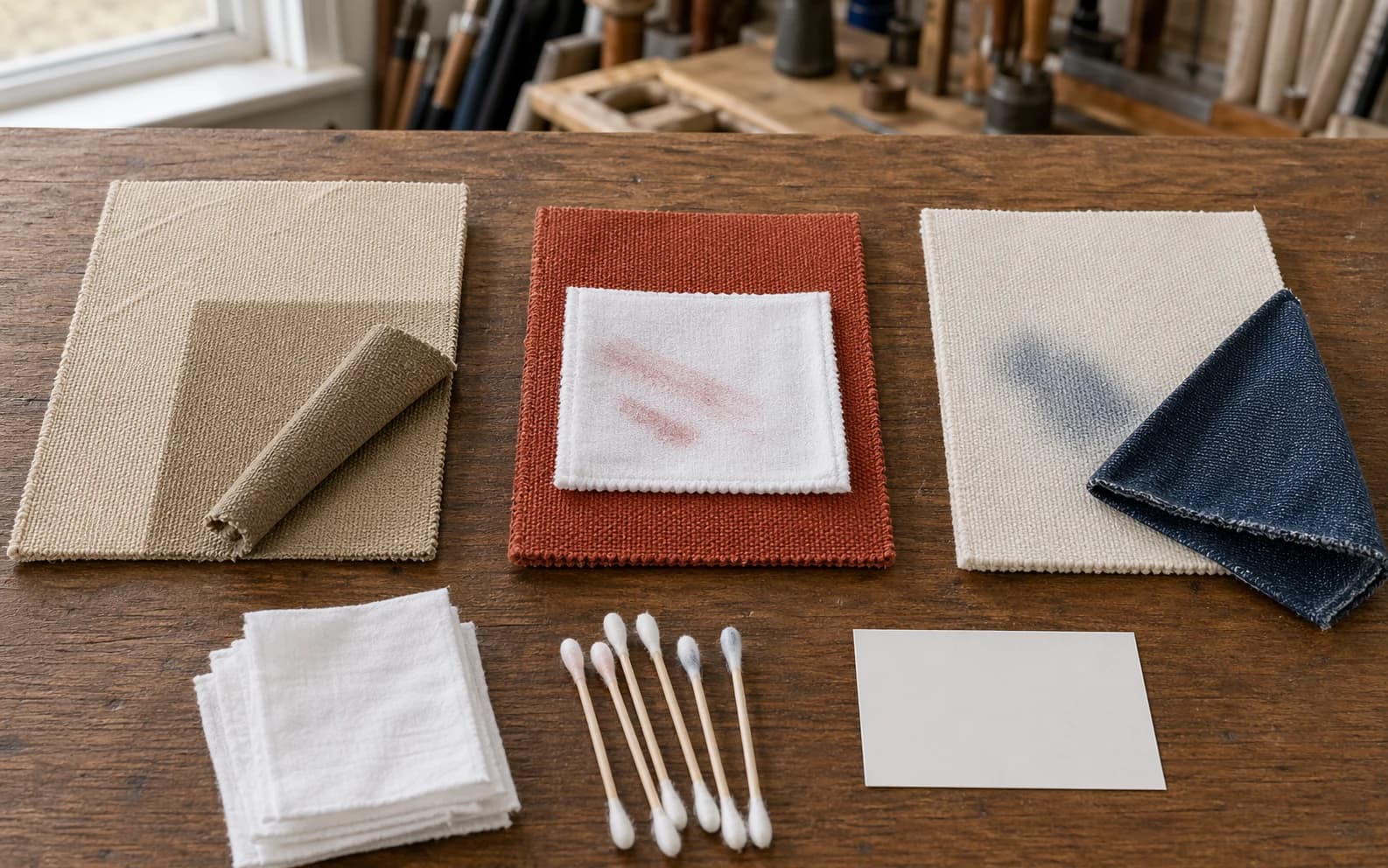
color stability inspection
The photo test should be simple enough that another upholsterer can repeat it: exposed area, protected comparison, white cloth, note of dry or damp testing, and the customer's cleaning history. If the fabric has no supplier data, the shop's own hidden-area test becomes the practical evidence.

protected area comparison
A diagnostic path for colour complaints
The sequence matters because each step can change the risk of the next one. If a cloth test shows the upholstery dye is moving, the shop should not proceed as if it is handling ordinary soil. If the protected area proves the colour is gone, stronger cleaning may only damage the fibre and make the pale area more obvious.
Colour Problem Diagnostic Path
- 1Compare protected fabricA darker fold, seam allowance, or cushion underside shows whether the exposed area has lost colour.
- 2Test for crockingA clean white cloth reveals whether the upholstery dye itself is moving under dry or damp friction.
- 3Identify transferDenim, throws, packaging, rugs, or pillows can donate dye to light upholstery even when the upholstery dye is stable.
- 4Keep tests separateDry, damp, and solvent tests answer different questions; mixing them can hide the cause or spread the mark.
- 5Match the recommendationClean soil, document crocking risk, treat transfer cautiously, and do not promise to restore missing colour.
Start with dry observation. Photograph the whole piece in normal light, then photograph the affected zone beside a protected comparison. Ask whether the furniture was moved near a window, recently cleaned, used with dark clothing or throws, exposed to hair products or body oils, or stored against printed packaging.
Only then move to testing. Use a clean white cloth and gentle pressure first. Keep dry and damp tests separate, because some dyes remain stable when dry but move when moisture or cleaning chemistry is introduced. If the fabric has a cleaning code or supplier specification, treat it as a limit, not a guarantee.
What can be corrected
Colour problems often create customer disappointment because the visible symptom looks cleanable. Professional language should be honest without being evasive.
| Finding | Reasonable recommendation |
|---|---|
| Soil lifts evenly and protected colour matches the exposed area. | Cleaning may solve the complaint, subject to normal testing and fabric-code limits. |
| Protected fabric is clearly darker than exposed fabric. | Explain fading or colour loss. Cleaning can remove soil but cannot restore missing colour. |
| Upholstery dye transfers to a white cloth. | Stop before aggressive treatment. Document crocking risk and discuss replacement, limited cleaning, or acceptance of the limitation. |
| Foreign dye is visible but the upholstery dye is stable. | Controlled stain treatment may be attempted, but the risk of spread, halo, or permanent transfer must be explained first. |
| Soil, abrasion, and fading overlap. | Separate the quote into what cleaning can improve and what only reupholstery or replacement can correct. |
Worked case: the pale arm and the denim mark
A customer brings in a cream chair with one pale arm and a blue-gray mark on the seat. They ask whether the shop can "just clean the colour back."
The pale arm is inspected first. Under the loose cushion, the fabric is warmer and darker. The outside arm, closest to the window, is flat and pale. A white cloth test does not pick up much soil. That points toward fading or fibre change, not a removable stain.
The seat mark is different. A dry cloth test on the blue area does not pull upholstery dye, but the customer mentions dark jeans and a navy throw. A hidden damp test shows the mark can feather if over-wetted. That points toward external dye transfer with cleaning risk.
The correct recommendation is split, not general. The arm cannot be cleaned back to its protected colour. The seat mark may be improved only with controlled testing, and the customer should approve the risk before treatment. If the customer wants the piece to look uniform again, re-covering or replacing affected panels is the honest option.
Customer explanation
A useful customer explanation avoids blame and avoids pretending that all colour problems behave alike:
"This chair has two different issues. The arm appears to have lost colour where it was exposed, so cleaning may remove soil but it will not replace the missing dye. The seat mark looks more like outside dye transfer, which we can test carefully, but some transferred dyes spread or become permanent. We should document the test area before deciding whether cleaning, panel replacement, or reupholstery makes sense."
That explanation gives the customer a path without promising a result the material cannot support.
Build a controlled test plan
Colour testing should be small, staged, and documented. Start with dry inspection, then dry crocking, then damp testing only if the fabric and customer approval support it. Keep each test separate so the shop can tell whether colour moved from friction, moisture, cleaning chemistry, or the foreign dye itself. A single wet scrub mark does not explain enough.
Use clean white cloths and label them if the result matters: dry rub, damp water test, proposed cleaner, rinse check, and donor-material check if available. Photograph the cloth beside the test area, then photograph the area after it dries. Some colour movement looks minor when wet and becomes obvious after drying. Some rings appear only after moisture migrates through soil or residue.
The test plan should include a stopping rule before visible treatment starts. Stop if original upholstery dye moves, if the fabric lightens, if pile changes, if a halo appears, if the mark spreads, or if the affected area requires more moisture or friction than the textile can tolerate. Stopping is not failure; it is the point where diagnosis prevents damage.
Separate customer history from proof
Customer history is useful, but it is not proof by itself. A customer may remember a spill, a cleaning product, a throw blanket, or a move near a window. That history gives the shop possibilities to test. The fabric still has to confirm the diagnosis through protected comparison, cloth testing, texture inspection, and drying behaviour.
For example, a customer may blame denim for a blue mark, but the mark could be unstable upholstery dye, a cleaning halo, or colour from a cushion backing. Another customer may blame sunlight for fading, while the true problem is alkaline cleaner damage or abrasion that makes the fabric reflect light differently. The job file should record what the customer reported and what the shop observed as separate facts.
This distinction keeps the recommendation honest. "Customer reports dark throw on seat; testing suggests external dye transfer" is stronger than "throw caused stain." "Protected fabric is darker than exposed arm; likely fading or colour loss" is stronger than "sun damage" unless exposure history supports that conclusion.
When cleaning is not the right answer
Some colour complaints need replacement, reupholstery, panel work, or acceptance rather than cleaning. Missing dye, faded fibres, bleached spots, worn pile, cracked coating, and unstable crocking cannot be restored by stronger treatment. Cleaning may remove soil around the damage and make the permanent colour change more visible.
The shop should explain this before pricing stain removal. If one panel is faded and the rest of the sofa is stable, panel replacement may be more honest than repeated cleaning attempts. If denim transfer has penetrated a pale fabric and testing causes spread, the better answer may be partial improvement only or no treatment. If the upholstery dye itself crocks onto clothing, the customer needs to know that ongoing use and cleaning both carry risk.
Commercial work adds another layer. A waiting-room chair that transfers dye to clothing or cannot tolerate approved cleaning may be a material-selection or replacement issue, not a cleaning issue. The recommendation should protect users and staff, not simply chase appearance.
Final diagnostic record
A complete colour complaint file should show the affected area, protected comparison, test cloths, customer history, fabric code or supplier limit if available, and the final recommendation. It should also state whether the issue is missing colour, moving colour, foreign colour, soil over colour change, or uncertain.
That last word matters. Sometimes the evidence supports a cautious but incomplete diagnosis. It is better to say "likely dye transfer with spread risk" than to overstate certainty. Colour troubleshooting is professional when the customer can see the reason behind the recommendation and the shop can show why stronger cleaning was accepted, limited, or refused.
Common mistakes
- Calling every dark mark soil before checking protected fabric and texture.
- Treating fading with stronger cleaner, which can leave the fibre lighter, rougher, or haloed.
- Testing only wet, then missing a dry crocking problem that will show up on clothing.
- Ignoring the donor material in dye transfer, such as denim, blankets, cushions, rugs, or packaging.
- Promising uniform colour when soil removal may reveal abrasion or sun damage underneath.
- Failing to photograph the control area before treatment changes the evidence.
Good troubleshooting ends with a defensible recommendation. The shop should be able to point to the protected comparison, the cloth test, the customer history, and the fabric limits, then explain what can be improved and what cannot. Colour work is successful when the diagnosis is precise, the treatment risk is named, and the finished result does not depend on an impossible promise.
Knowledge Check
Pass this check to complete the lesson.
Answered 0/4.
Question 1
A cream sofa arm is pale on the outside face, but the fabric under the cushion and inside a fold is noticeably warmer and darker. A white cloth test picks up little soil. What is the strongest conclusion before quoting cleaning?
Question 2
During pre-cleaning inspection, a dry white cloth picks up red colour from the upholstery fabric itself. The customer wants the seat cleaned aggressively because it is used every day. What should happen next?
Question 3
A pale cushion has a blue-gray mark where a dark denim throw was used. The upholstery fabric does not rub colour onto a white cloth, but a damp test on the blue area begins to feather the mark. Which recommendation is most responsible?
Question 4
After a controlled cleaning test, a dark headrest area lightens, but the fabric underneath looks shiny and thin compared with a protected area. What should the shop tell the customer?
Have a local piece ready for reupholstery?
For Metro Vancouver sofas, chairs, cushions, or commercial seating, mention "Fabric Fading, Crocking, and Dye Transfer" with your photos so we can price the actual work accurately.