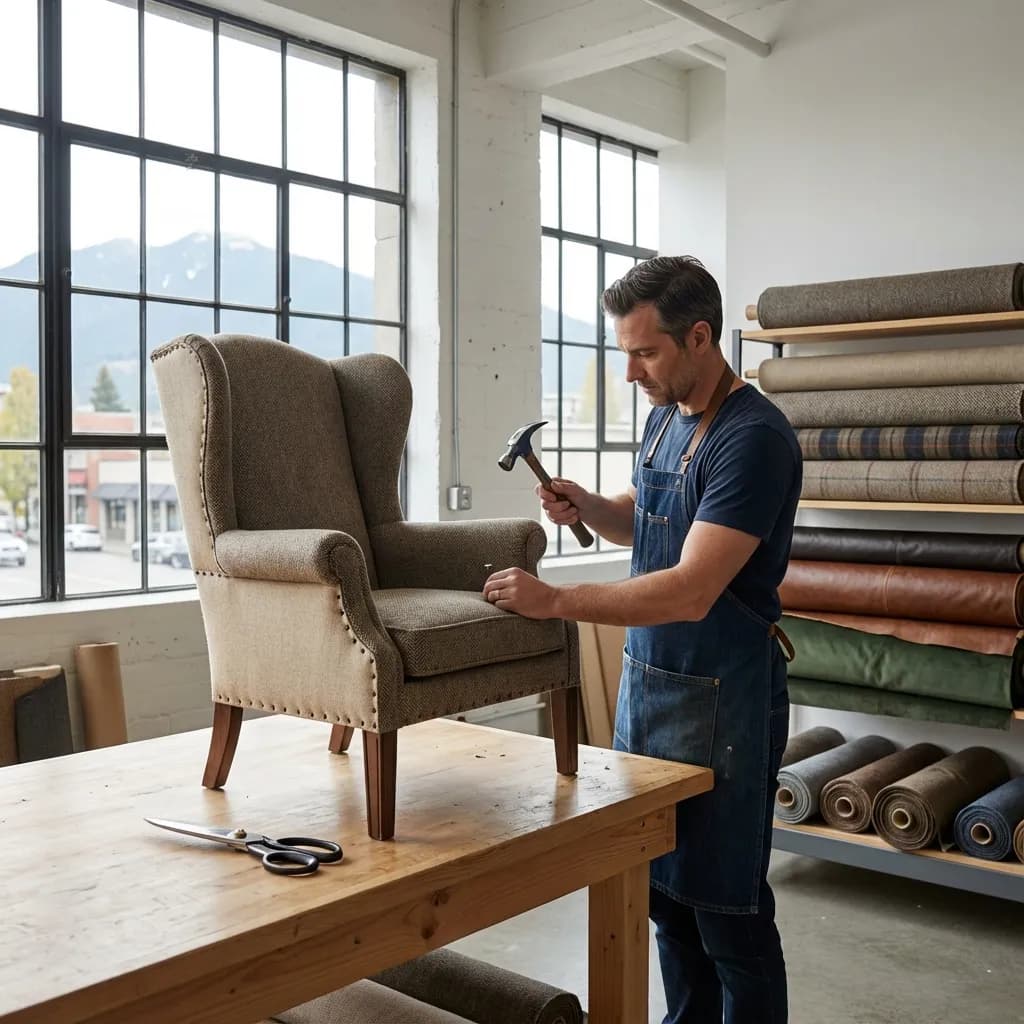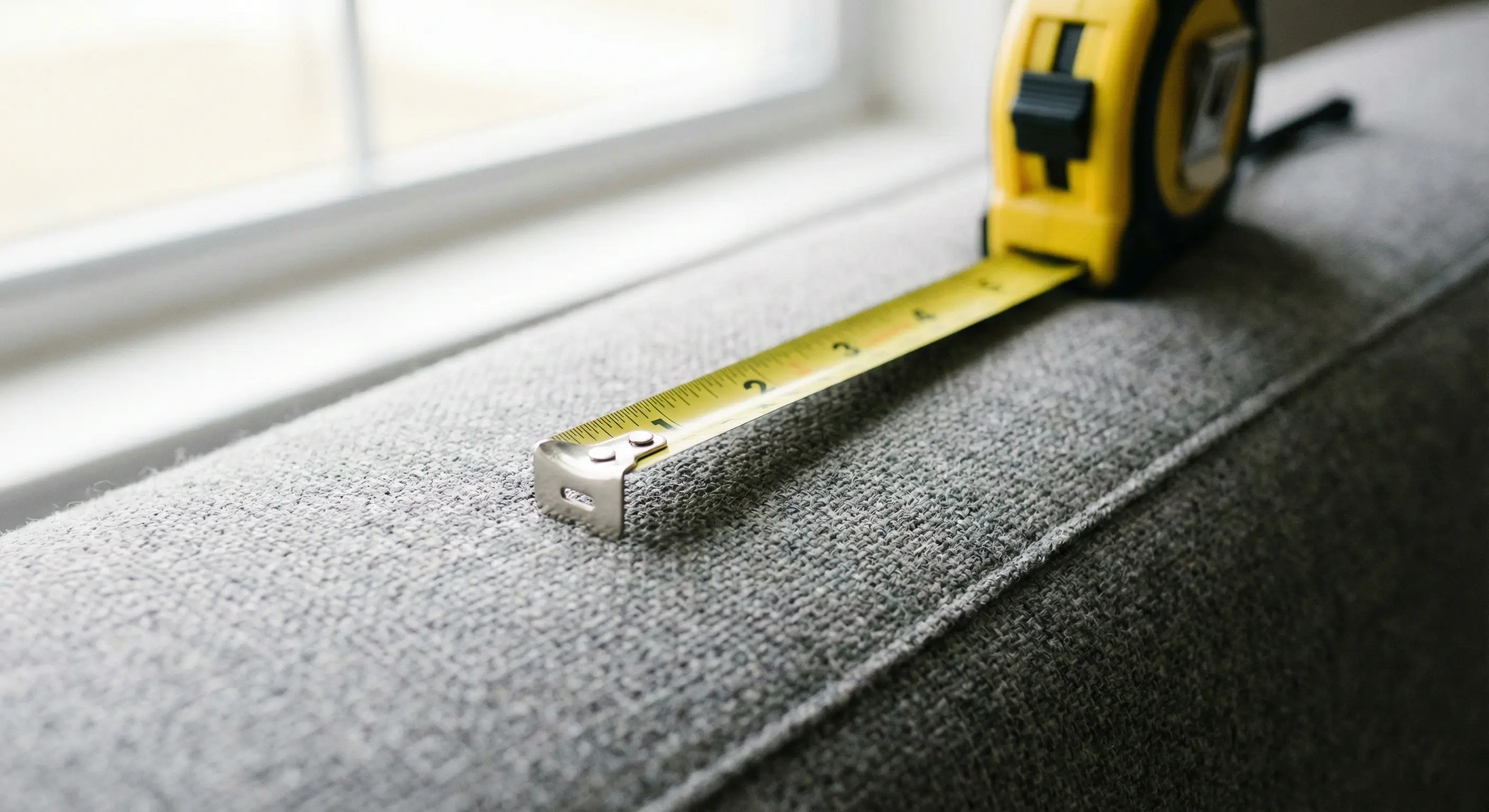
Embarking on a reupholstery project in Metro Vancouver is an exciting way to breathe new life into cherished furniture. However, one of the most critical steps happens before the first stitch is sewn: measuring. Accurate measurements are the foundation of a successful project, ensuring you purchase the correct amount of fabric and receive an accurate quote from your upholsterer.
Whether you're planning a DIY project or working with professional upholstery services, this guide will walk you through the process of measuring your furniture properly, avoiding costly mistakes and delays.
Essential Tools for Measuring
Before you begin, gather the right tools. A standard stiff construction tape measure is best for straight lines (Length, Depth, Height), while a flexible cloth measuring tape is indispensable for curves and contours. You'll also need a notepad and pen to record every dimension immediately—don't rely on memory! A sketch of your furniture piece to write measurements directly onto is also highly recommended.
How to Measure a Sofa for Reupholstery
Measuring a sofa involves capturing its three-dimensional footprint. Here is the standard industry method:
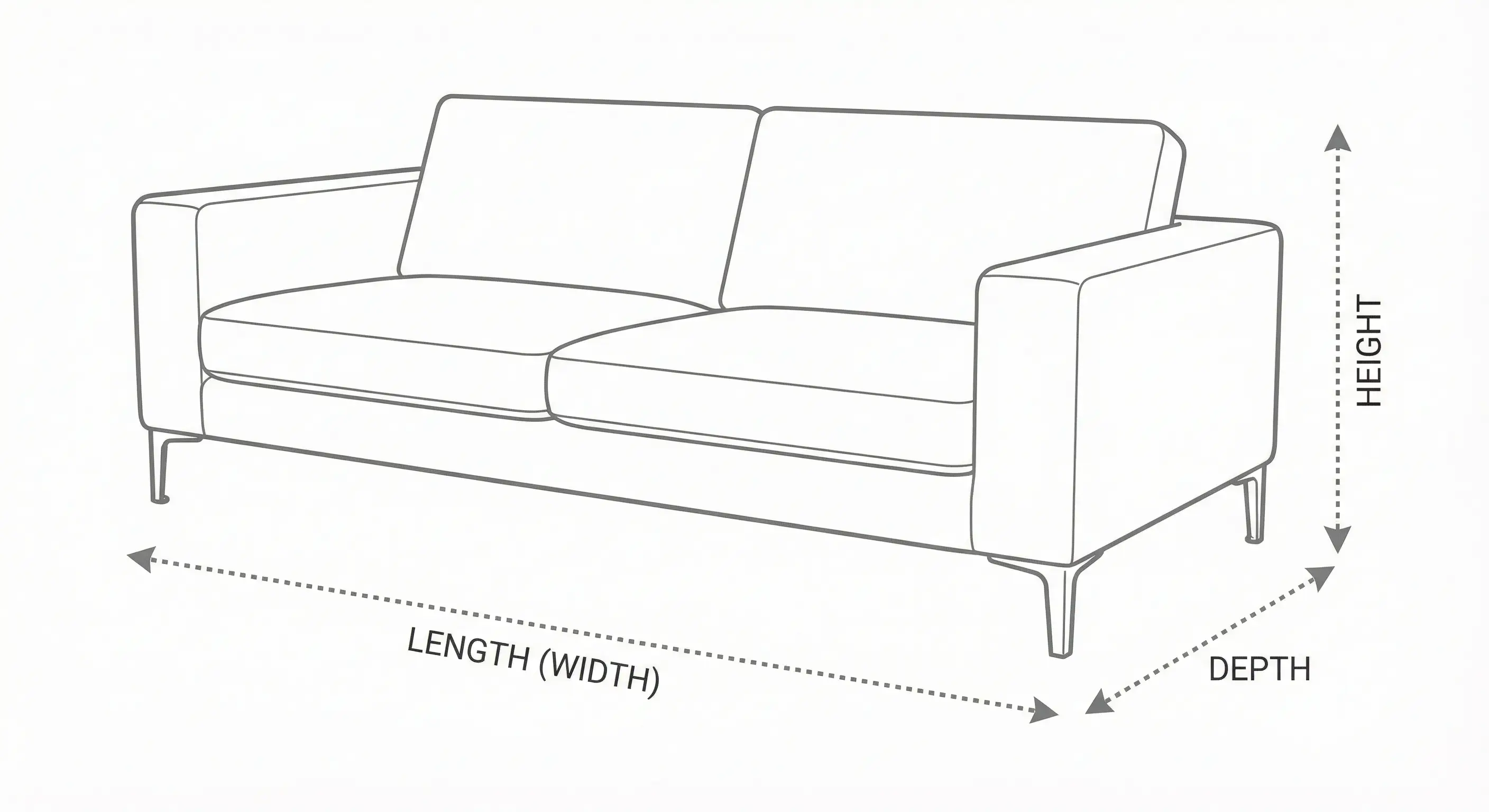
1. Overall Length (L)
Measure from the furthest point on the left arm to the furthest point on the right arm. This is the total horizontal space the sofa occupies.
2. Overall Depth (D)
Measure from the very front edge of the seat (or arm, if it protrudes further) to the furthest point on the back frame. This tells you how deep the piece is.
3. Overall Height (H)
Measure from the floor to the highest point of the back frame. Note: If you have loose back cushions that sit higher than the frame, measure to the top of the frame for the structure, but note the cushion height separately for fabric estimation.
4. Seat Dimensions
Measure the Seat Width (between the arms), Seat Depth (front of cushion to back cushion), and Seat Height (floor to top of seat cushion). These are crucial for calculating fabric for cushions and ensuring new foam density is correct.
5. Arm Height and Width
Measure from the floor to the top of the arm, and the width of the arm itself at its widest point.
Measuring Chairs and Armchairs
The process for chairs is similar to sofas but often requires more attention to specific design elements. For a standard armchair:
- Inside Back: Measure from the top of the seat cushion to the top of the chair back.
- Inside Arm: Measure from the top of the seat cushion to the top of the armrest.
- Exterior Back: Measure the height and width of the complete back panel.
If you have a wingback chair, be sure to measure the "wings"—the side panels attached to the backrest—separately, noting their height and width.
Measuring Benches and Ottomans
While seemingly simple, ottomans and benches have their own nuances. Measure the Length and Width of the top surface. Then, measure the Height of the apron (the side panels) if applicable. If the piece is tufted (has buttons), you must account for extra fabric to tuck into the pleats—typically adding 2-3 inches per button or fold is a safe buffer.
Estimating Fabric Yardage
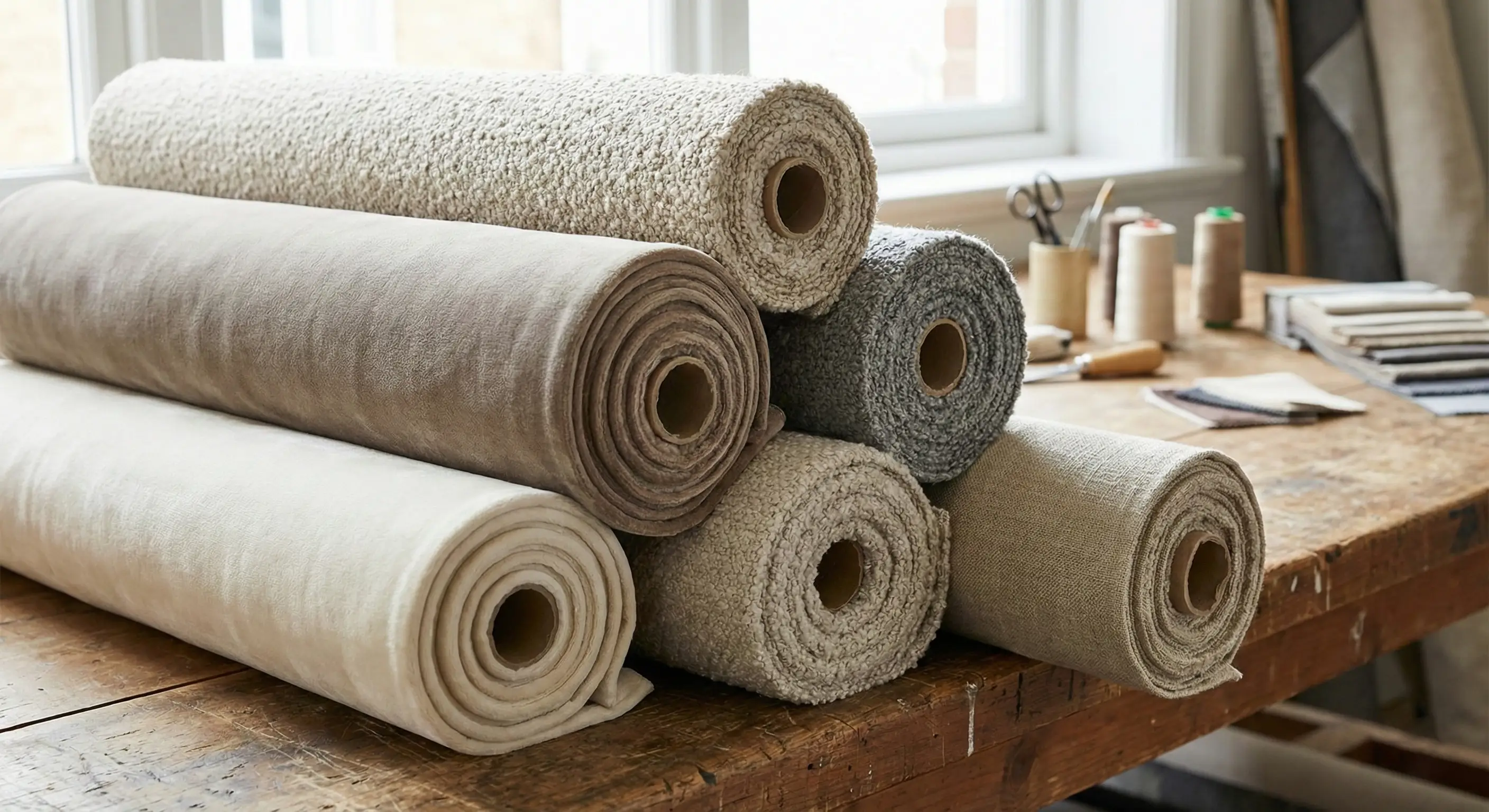
Once you have your measurements, you can estimate fabric needs. Keep in mind standard upholstery fabric rolls are 54 inches wide. Here are some rough estimates for solid fabrics (patterns require more for matching):
- Dining Chair (Seat only): 0.75 yards
- Club Chair / Wingback: 6-8 yards
- Loveseat (2-seater): 10-12 yards
- Standard Sofa (3-seater): 14-18 yards
- Large Sectional: 24+ yards
Pro Tip: Always add 10-15% extra to your calculated total for seam allowances, mistakes, and future repairs. If you choose a fabric with a large repeat pattern (like a floral or geometric design), you may need to add 20-30% more to ensure the pattern aligns perfectly across the piece.
For a detailed breakdown of costs associated with these yardages, check out our guide on sofa reupholstery costs in Vancouver.
Common Measuring Mistakes to Avoid
- Ignoring the Repeat: Failing to account for pattern repeats is the #1 reason for fabric shortages.
- Measuring "Tight": Don't measure exactly from seam to seam. Measure from the widest structural points to ensure full coverage.
- Forgetting "Waterfall" Skirts: If your furniture has a skirt, measure from the top of the deck (under the cushion) down to the floor, plus hem allowance.
- Assuming Symmetry: Older furniture frames can warp. Measure both arms and both sides of the back to check for variances.
Conclusion
Taking the time to measure your furniture accurately is the first step toward a beautiful, professional-quality reupholstery result. It empowers you to communicate effectively with fabric suppliers and upholstery professionals, ensuring your vision comes to life exactly as you imagined.
If the math feels daunting or you're dealing with a complex heirloom piece, don't hesitate to reach out to the experts. We're here to help guide you through the process, from measurement to the final reveal.
Need help measuring or ready for a quote? Contact VI Reupholstery Sofa today. We serve Vancouver, Burnaby, Richmond, and the entire Lower Mainland with expert upholstery services.